Translational Motor Neurophysiology Lab

We study how spinal cord circuits generate, regulate and preserve movement, and how they change in neuromuscular disease.
Our lab links mechanistic neurophysiology in mouse models with directly comparable, non-invasive recordings in people, with the aim of developing spinal circuit biomarkers that can help patients.
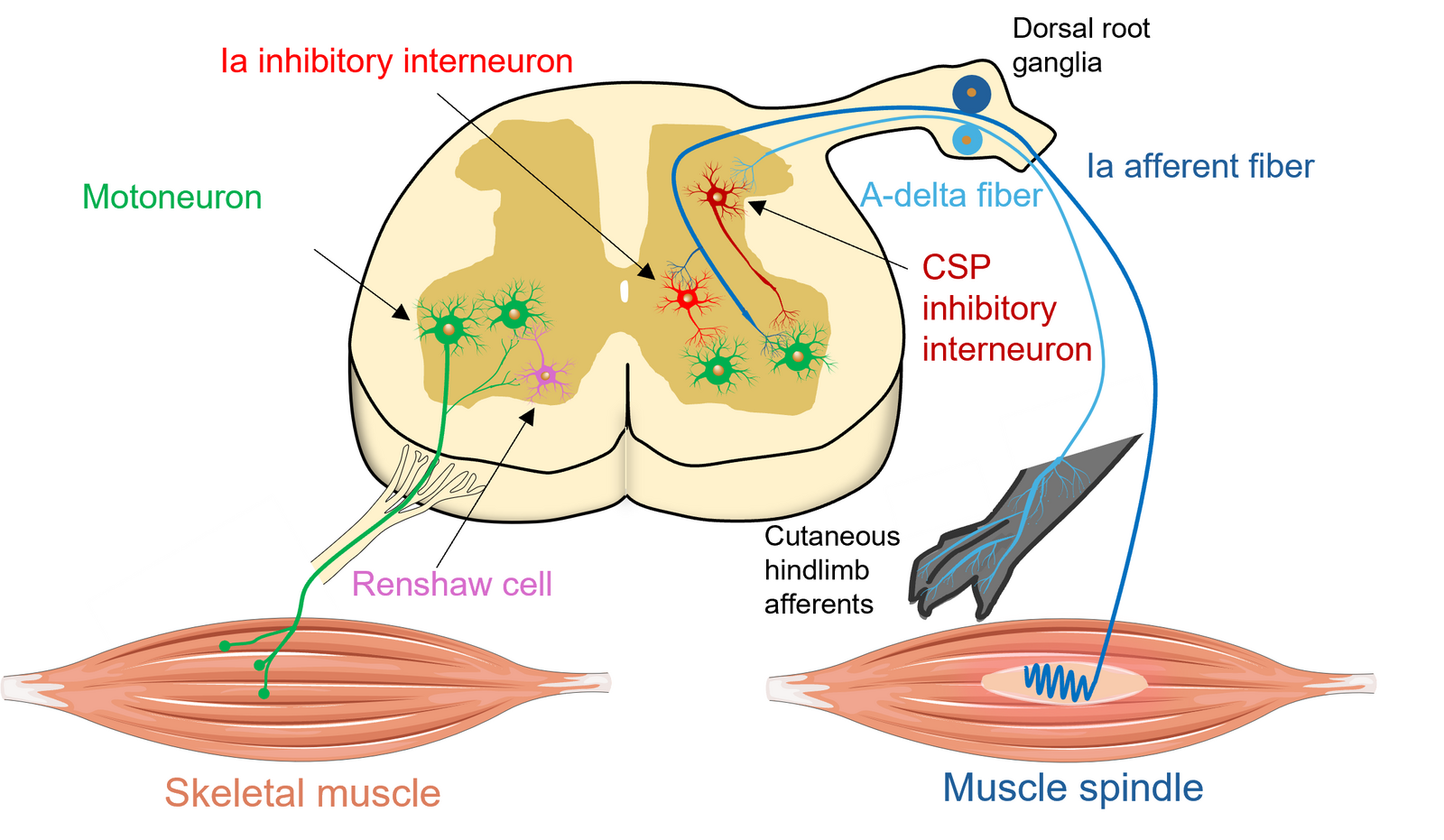
The Translational Motor Neurophysiology Lab is led by Dr Filipe Nascimento at University College London (UCL). Our work focuses on the spinal microcircuits that control movement — motoneurons and the premotor interneurons that shape their output — and on how these circuits adapt, compensate and eventually fail in conditions such as amyotrophic lateral sclerosis (ALS), also known as motor neuron disease (MND).
In ALS, clinical weakness only appears after more than half of the motoneurons supplying a muscle have been lost, which reflects a remarkable capacity of the nervous system to compensate. We want to understand these compensations: which spinal circuits adapt, when, and how, so that windows of neuronal resilience can be used for earlier diagnosis, better prognosis and new therapies.
To do this, we combine in vitro, ex vivo and in vivo electrophysiology in mice with high-density surface electromyography (HDsEMG) and motor unit decoding in humans. Because the neuromuscular system is so similar between species, we can ask the same questions in mice and in people.
news
| Oct 06, 2026 | Welcome to the new website of the Translational Motor Neurophysiology Lab at UCL! Interested in taking part in our research? Visit our patients & public page. |
|---|---|
| Mar 24, 2026 | Two new preprints on bioRxiv: high-frequency common inputs entrain motoneuron subpopulations differently, and in vivo motor unit decoding and in vitro characterisation of spinal circuits for urination in adult mice. |
| Sep 17, 2025 | Our paper on personalised mapping of inhibitory spinal cord circuits in humans, combining non-invasive neural decoding with in silico modelling, is out in Science Advances. |
| Dec 10, 2024 | Our study showing that spinal microcircuits go through multiphasic homeostatic compensations in a mouse model of motoneuron degeneration is published in Cell Reports. |
selected publications
- Sci AdvPersonalized mapping of inhibitory spinal cord circuits in humans via noninvasive neural decoding and in silico modelingScience Advances, 2025
- Cell RepSpinal microcircuits go through multiphasic homeostatic compensations in a mouse model of motoneuron degenerationCell Reports, 2024
- Brain
- STMPathophysiology of Dyt1-Tor1a dystonia in mice is mediated by spinal neural circuit dysfunctionScience Translational Medicine, 2023
- JNPIn vitro longitudinal lumbar spinal cord preparations to study sensory and recurrent motor microcircuits of juvenile miceJournal of Neurophysiology, 2022